

Recognizing early signs of autism can help families understand their child and access the right support. Noticing differences in communication, social interaction, or behavior early on allows parents to feel more confident and informed.
Signs & Diagnosis
Early Signs of Autism
Autism may present differently in every child. Some differences appear in early childhood, while others become more noticeable as the child grows. Recognizing these early signs can help families seek guidance and access supports sooner.
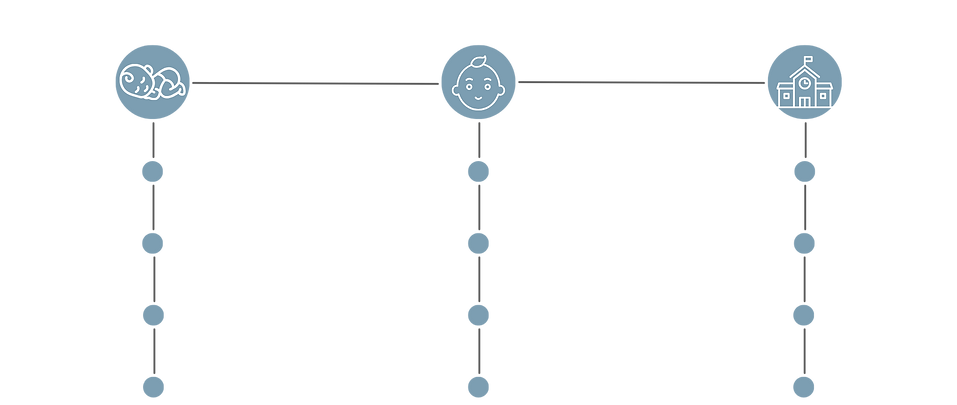
Before Age
2
Preschool Years
(2-5)
School Age
( 5+)
Limited eye contact
Delayed babbling or speech
Reduced response to name
Fewer Gestures like pointing or waving
Repetitive movement
(hand flapping, rocking)
Sensory Sensitivities
(sounds, textures, lights)
Strong preference for routine
Difficulty with pretend play
Difficulty making friends
Literal interpretation of language
Intense, focused interests
Emotional regulation
challenges

What a Diagnosis Involves
A formal autism assessment helps families understand their child’s development through structured observations, interviews, and screenings.
Every child is unique, and the process examines communication, social skills, behaviour, and sensory responses. Knowing what to expect at each step can reduce uncertainty, guide families to support, and make the journey feel more manageable.

Referral
Speak with your doctor or Pediatrician to start the process
Developmental Assessment
Evaluation of communication, social skills, and behavior
Observations & Interviews
Specialists observe your child and gather caregiver input
Feedback & Next Steps
Professionals discuss findings and available supports
Who Can Provide a Diagnosis
Autism assessments are typically completed by trained professionals, including developmental pediatricians, psychologists, psychiatrists, and specialized diagnostic teams. Each professional brings expertise to understand your child’s unique strengths, challenges, and needs.

Developmental Pediatrician
Assesses your child’s overall development and guides you through the diagnostic process

Psychologist
Evaluates cognitive, emotional, and behavioral aspects to understand your child’s strengths and needs.

Specializes in diagnosing neurological and mental health differences in children
Psychiatrist

A team of experts using structured assessments to provide a comprehensive evaluation
Specialized Diagnostic Team
Hover your cursor over for more information
A formal diagnosis allows access to government - funded programs and school support
If You Have Concerns
If you notice developmental differences in your child, speaking with your family doctor or pediatrician is a helpful first step. Trust your observations — early conversations can provide clarity and guidance.
Early awareness is not about labelling
— It’s about understanding and supporting your child
